My passion lies in applying cutting-edge Artificial Intelligence, Agentic AI, and robotics to drive advancements in human life and health. I focus on developing scalable, real-world solutions.
Previously, I contributed to machine learning research and development at leading organizations including Amazon Alexa, HPE, and Enverus.
Recent Blog Posts
Engineering the Glue: The Rise of Autonomous Harness Engineering
In the rapidly evolving landscape of AI, research suggests that the harness—the “glue” or “plumbing” that determines what an LLM stores, retrieves, and sees—can be as critical as the model itself. A well-engineered harness can account for a 6x performance gap on the same benchmark using the same fixed model weights. Traditionally a manual process of expert trial and error, we are now seeing the emergence of automatic harness engineering, where agents autonomously write, test, and refine their own infrastructure.
AI Agent Security
Autonomous AI agents — from warehouse robots to financial trading bots and conversational assistants — have become ubiquitous. In 2025 and early 2026, the research community and industry accelerated efforts to understand and defend against risks unique to these agents. Alongside academic papers, we’ve seen detailed industry case studies such as AWS’s multi‑agent penetration‑testing architecture and Anthropic’s Mozilla partnership, which together demonstrate both the power and the pitfalls of deploying agentic systems in the wild. This post walks through the most important findings, frameworks, and best practices that practitioners should know today.
Memory Agent Evaluation
Memory-enabled agents typically fail in two ways: they store the wrong information (noise) or they store the right information but cannot reliably retrieve it (access). Memory is foundational for building context-aware, personalized AI. In this post, I walk through a practical approach using a Memory Agent built with LangGraph. This agent doesn’t just store facts; it autonomously decides when to commit information to long-term storage and how to surface it. Finally, I’ll demonstrate how to evaluate these behaviors using concrete metrics grounded in the LongMemEval benchmark.
Olmo3 Open Reasoning Llm
The Allen Institute for AI (AI2) has released Olmo 3, an open reasoning LLM. This post outlines an overview.
Exploring The Dynamics Of Llm Based Agent Frameworks
In the ever-evolving landscape of artificial intelligence, LLM-based-agent frameworks stand at the forefront of innovation, driving systems that are more robust, adaptable, and intelligent. These frameworks represent a paradigm shift from solitary computational entities to a collective of agents, each with unique capabilities and roles, working in concert to solve complex problems.
Large Language Models And Generative Ai Hand Book
Explain Large Machine Learning Model Output
In this post I will explain Integrated Gradient, a popular technique to explain black box type machine learning model.
Work In Progress Financial Data Science Part1 Cloud Infrastructure
In this article, I will demonstrate how to use AWS Step Function. AWS Step Function is a service that lets you orchestrate multiple AWS services in a workflow. I will use it to analyze financial data with some simple code examples. The code examples are written in AWS CDK, which is a tool that helps you create cloud resources with your preferred programming language.
Machine Learning Model Inference
Inference is the process of using machine learning model to predict the outcome of a given input record. Inference typically requires low latency to ensure a smooth customer experience. This post will outline a few options for optimizing inference operation.
Distributed Systems Review
This post will review a distributed system’s research paper:
Millions of Tiny Databases by Brooker et al.
In Demand Generative Ai Skills For The Future
The domain of Generative AI is advancing swiftly, leading to a surge in the need for adept professionals adept at steering through its intricate terrain. Pioneering firms are on the lookout for gifted contributors who can aid in crafting cutting-edge AI models. Let’s delve into the expertise that’s gaining prominence in this trailblazing field.
Fact checking NLP: Selecting the right evidence using BERT
In order to verify a claim, we can utilize a knowledge corpus like Wikipedia. Checking a claim generally involves three steps 1) relevant document retrieval from knowledge corpus, 2) relevant sentence retrieval from the documents, 3) identify whether the claim is supported by the evidence sentences.
Language model to identify next mutant coronavirus 501Y.Vx: Research paper review
A virus continuously evolves to escape its host immune system. A mutant virus needs to have two properties:
- Fitness
- Semantic change
My Picks From Neurips 2020
NeurIPS 2020 is virtual this year. As a result, not only the talks were virtual, but also the networking and poster sessions were held online. I got to experience gather.town for the first time. It felt like playing video games at times. I changed my avatar many times :D
All the keynotes had sign language interpretation. I thought it was cool!
Below are some of the talks that I enjoyed watching or reading.
Machine Learning For Autonomous Vehicle
Autonomous vehicle (AV) heavily utilizes machine learning for various tasks. Majority of these tasks are related to its perception. The perception module helps the vehicle sees the world. Recent advancements in deep learning have improved the perception for autonomous.
Effective Reinforcement Learning
Covid 19 Tracking Through Statistics
I have done some analysis on COVID-19 and its related datasets, with Bangladesh as a casestudy. You can read the findings of the study in this blog written in Bengali.
Reproducible Machine Learning
Can we reproduce an ML model’s validation loss across two training runs?
Amazing Ai
High Dimensional Visualization
Optimization often produces high dimensional data. This post will include some example plots for these optimizations.
Distributed Gradient Descent
Recursive Feature Elimination With Cross Validation (rfecv)
Feature selection helps machine learning model separate out noise from signal. It drops unnecessary features that are not contributing to the model’s performance. Following slides describe RFECV which is the recursive method of eliminating noisy features.
Math Behind Random Forest
Random forest is one of the widely used machine learning models for supervised learning task. It is robust to missing values in dataset as well as to outliers. It is an ensemble of many decision trees. Therefore, it achieves good accuracy in practice. In this post, I will present detail mathematics of how a Random forest works.
Parallel Computing For Python Workload
Modern day’s computer processor comes with multiple cores. Utilizing different cores often vastly reduces runtime of programs. This is helpful in the context where program manipulates large of amount of data. This tutorial will list out some ways to enable parallelization of Python code involving Pandas data frame.
Relational Machine Learning
(Colab Notebook for the blog post)

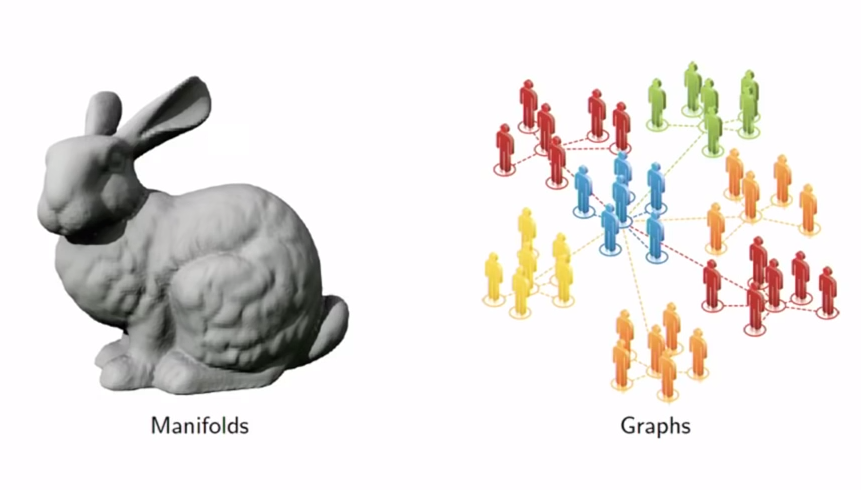
In real world data often live in non-euclidean space. Examples include social networks, point clouds, etc. Such data contains topological information and are non-linear in nature. Typical machine learning models treat data point as independent to each other. In this post we will look at a model that exploits the inter-relationship of the data points and apply them to perform machine learning task such classification. First we look at some non-euclidean data
You're up and running!
Next you can update your site name, avatar and other options using the _config.yml file in the root of your repository (shown below).